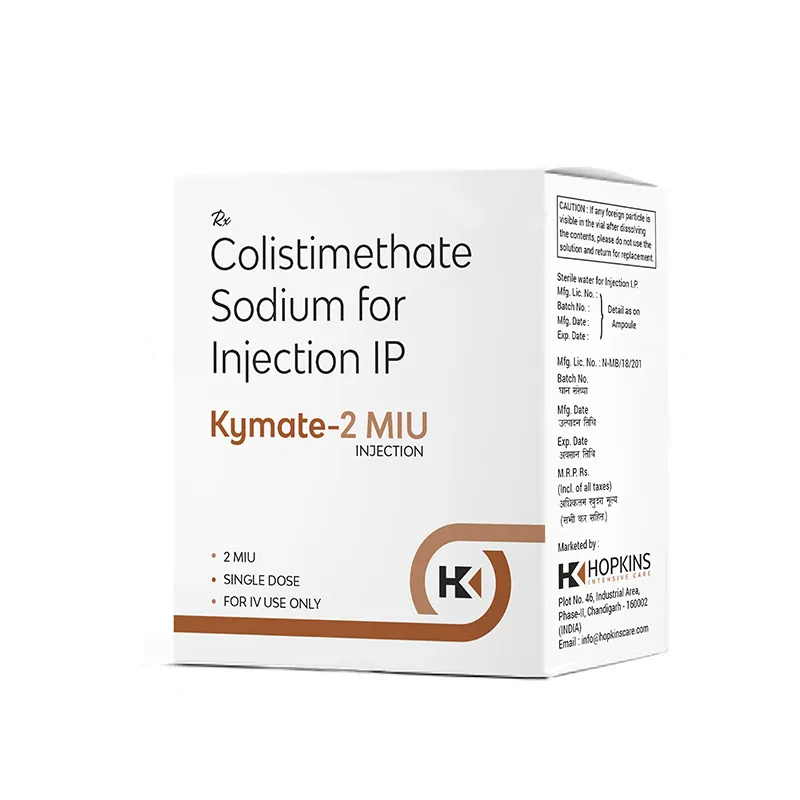
Kymate 2
Colistimethate 2miu
| Packing | Vial Tray Pack |
|---|
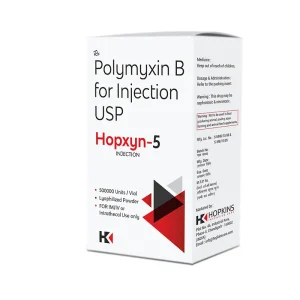
Kymata 2 MIU is an injectable formulation containing Colistimethate 2miu for hospital and intensive-care use only, as directed by a registered medical practitioner. Kymate 2 is available in the Hopkins Intensive Care as part of the Lyophilised Groups.
Colistimethate sodium is an antibacterial belonging to the polymyxin group, and could be used for some severe infections with a susceptible Gram-negative organism.
Kymate 2 Composition
Kymate 2 contains the following active ingredient:
Colistimethate – 2 MIU
MIU: Million International Units, the unit of potency of colistimethate preparations.
Kymate 2 is sometimes used for treating certain serious bacterial infections that can be treated with colistimethate. It is active against certain Gram-negative bacteria, which can be resistant to other antibacterial drugs.
Colistimethate therapy should be tailored according to the particular suspected or proven pathogen, antimicrobial susceptibility data, site of infection, and the clinical status of the patient. In hospital practice, colistimethate may have a place in the management of problematic infections when other alternative antibiotics are inappropriate or not effective.
Not for use in ordinary infections or viral illnesses unless a doctor of medicine has established an appropriate bacterial indication.
Colistimethate is a prodrug that is hydrolysed in the body to form the active antibacterial colistin. Colistin is active against susceptible Gram-negative bacteria by disrupting the outer membrane.
It may also engage with elements of the bacterial cell membrane and compromise the integrity of the membrane. This disruption can impair the cell function of the bacteria, which in turn leads to their death.
As colistimethate is generally designated for specific patient care settings, rational use of colistimethate should be managed with antimicrobial stewardship and clinical judgment.
Kymate 2 is an injection that must be reconstituted and administered by a healthcare professional. Treatment through injection is based on the medical indication and the patient’s condition and should be conducted by a healthcare professional.
Dose selection may be related to: body weight, degree of impaired renal function, site and severity of the infection, susceptibility of the causative organism to the antimicrobial drug. Impaired renal function will require dose individualisation and patient monitoring.
Thus, do not reconstitute, do not inject and do not dose the product.
Before receiving Kymate 2, your doctor should know if you have had kidney problems, previous allergic reactions to colistimethate or colistin, or are taking other medication.
Appropriate clinical and laboratory monitoring is necessary in some circumstances when colistimethate treatment is indicated.
Report immediately if you feel any unusual weakness, tingling, breathing difficulties, confusion, or decreased urination.
As with other medicines, side effects can occur with the use of Kymate 2. Potential side effects include changes in kidney function, tingling, paralysis, dizziness, weakness, and other neurological effects. Local reactions may be observed with injected medication.
The frequency and severity of potential side effects depend on the dose, duration of therapy, and patient factors such as renal function.
Therefore, appropriate medical monitoring should be maintained during therapy.
Kymate 2 is an injectable medicine for antibacterial use containing Colistimethate 2 MIU. Kymate 2 is part of the Hopkins Intensive Care range and is supplied in the Lyophilised Groups.
Kymate 2 is composed of Colistimethate 2 million international units (or 2 MIU) as an active substance.
Colistimethate has been used in certain serious infections caused by susceptible Gram-negative bacteria. It is usually under the framework of special therapies due to the potential risks of dose selection and less experience with its usage.
Yes. An important consideration in the use of colistin is the effect on the kidneys. Impaired kidney function requires adaptations in treatment and monitoring.

+91 75081 05761
info@diyahealthcare.com
Plot No. 46, Near Passport Office Industrial Area, Phase 2 Chandigarh – 160002